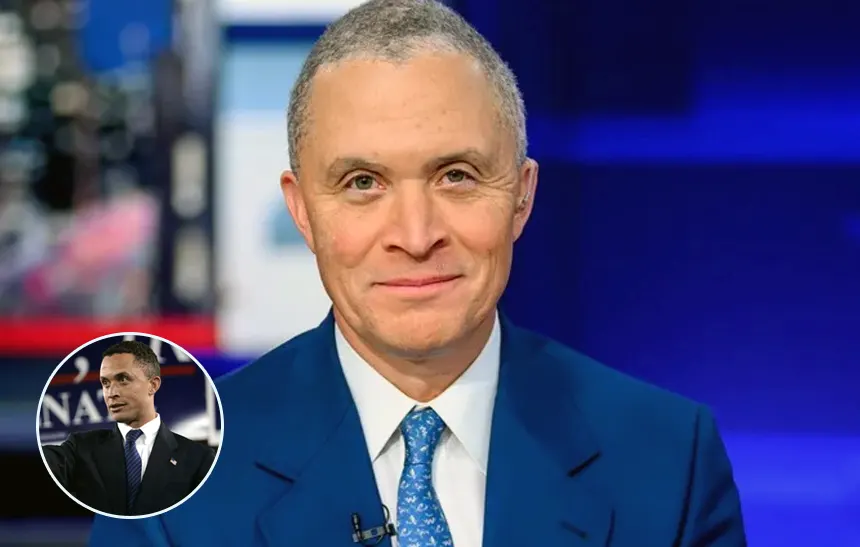
Harold Ford Jr. is an American former congressman, financial executive, and political commentator. Born on May 11, 1970, in Memphis, Tennessee, he served in the U.S. House of Representatives from 1997 to 2007. He is the son of former congressman Harold Ford Sr. and currently works as Regional President of PNC Bank New York.
- Introduction
- Quick Bio Table
- Early Life and Family Background
- Education and Academic Journey
- Physical Appearance and Personality
- Parents
- Siblings and Extended Family
- Career and Professional Life
- Personal Life and Privacy
- Media Presence and Public Perception
- Net Worth and Lifestyle
- Future Prospects
- Legacy and Influence of Family
- FAQs
- Conclusion
Introduction
Some people are born into history. Harold Ford Jr. is one of them. Raised in one of Memphis’s most prominent political families, he didn’t just inherit a name – he built on it, carved out his own identity, and became a defining voice in American moderate Democratic politics.
From his childhood in Tennessee to the halls of Congress, then Wall Street, and eventually national TV, Ford’s story spans decades and disciplines. He’s a former congressman, a financial executive, a media commentator, and a father. Understanding who he is means understanding where he came from – and where he chose to go on his own terms.
Quick Bio Table
| Field | Details |
|---|---|
| Full Name | Harold Eugene Ford Jr. |
| Date of Birth | May 11, 1970 |
| Age | 55 years old (as of 2025) |
| Place of Birth | Memphis, Tennessee, USA |
| Nationality | American |
| Profession | Former Congressman, Financial Executive, Political Commentator |
| Famous For | Serving in the U.S. House of Representatives (1997-2007); son of Congressman Harold Ford Sr. |
| Father | Harold Eugene Ford Sr. |
| Mother | Dorothy Bowles Ford |
| Siblings | Jake Ford, Isaac Ford (full brothers); Andrew Ford, Ava Ford (half-siblings) |
| Marital Status | Married to Emily Threlkeld (since April 26, 2008) |
| Known Traits | Moderate, articulate, bipartisan, composed, media-savvy |
| Social Media Presence | Limited; occasional appearances via official channels and TV media |
Early Life and Family Background
Harold Eugene Ford Jr. was born on May 11, 1970, in Memphis, Tennessee, the eldest son of former Representative Harold Ford Sr. and Dorothy Bowles Ford. He came into the world already surrounded by politics. His grandfather, N.J. Ford, had built a well-known funeral home business in Memphis that became the foundation of the family’s community influence and, eventually, its political reach.
The family’s political influence grew from their funeral business. In addition to his father, Harold Ford Sr., who began his political career as a member of the Tennessee General Assembly, Ford’s uncles were also politically active and held local and state legislative positions.
Growing up inside that world shaped Ford early. When his father was sworn in as the first African American congressman from Tennessee in January 1975, Ford reportedly said, “This is what I want to do when I grow up.” That wasn’t just a child’s offhand comment – it turned out to be a precise preview of his future.
The Ford family has long been prominent in Memphis’s Black community. That prominence came with expectations, responsibilities, and – as Ford would later discover – a level of scrutiny that never really goes away.
Education and Academic Journey
Ford’s educational path was both privileged and serious. He attended Double Tree Elementary School, a public Montessori school in the Westwood neighborhood, although he graduated from the private St. Albans School, a prestigious university-preparatory school in Washington, D.C., which he attended after his father became a Congressman.
From there, he kept pushing. Ford earned his Bachelor of Arts in American History from the University of Pennsylvania and a Juris Doctor from the University of Michigan Law School. Between his undergraduate degree in 1992 and law school, he gained real-world experience in government – first as a staff aide to the Senate Budget Committee, then as a special assistant at the U.S. Department of Commerce.
What’s striking is that he finished law school in 1996 and ran for Congress in the same year. He arranged his final semester’s schedule to fly home to Memphis on weekends and campaign. That kind of drive – balancing academic demands with a political campaign at 25 – tells you a lot about who Harold Ford Jr. is.
Physical Appearance and Personality
Harold Ford Jr. carries himself with the kind of quiet confidence that comes from decades in public life. He’s tall, well-dressed, and consistently polished – whether on a Senate campaign trail or behind a TV desk.
Colleagues and commentators have described him as articulate and measured. He doesn’t shout. He reasons. That approach served him well in Congress, where he was known for crossing party lines when he believed the issue warranted it. As he put it early in his career, “I vote what I believe is right. I challenge my leadership when I believe they are wrong. I don’t give them my vote because it’s the partisan and political thing to do.”
That independent streak has defined him throughout his career and remains a core part of his public identity.
Parents
Father – Harold Ford Sr.
Harold Eugene Ford Sr. was a Democratic former member of the United States House of Representatives representing Memphis, Tennessee, for 11 terms – from 1975 until his retirement in 1997. He was the first African American to represent Tennessee in the U.S. Congress. His tenure in Congress shaped Harold Jr.’s entire worldview. The elder Ford was a tireless advocate for his district, pushing for job training, healthcare access, and support for lower-income communities.
His career wasn’t without turbulence. In 1987, federal prosecutors obtained an indictment against Ford Sr. from a grand jury. He was charged in 18 counts of conspiracy and fraud, but on April 9, 1993, a jury acquitted Ford of all charges. Despite that ordeal, Harold Sr. remained in office and left on his own terms.
Mother – Dorothy Bowles Ford

Dorothy Bowles Ford has been described as an educator and community leader. She married Harold Sr. in 1969 and raised their children through the complex world of a political family. Though she has largely stayed out of the public eye, her influence on Harold Jr.’s character is clear. Dorothy and Harold Sr. divorced in 1999.
Siblings and Extended Family
Harold Jr. has two brothers, Jake and Isaac, as well as two half-siblings, Andrew and Ava, from his father’s second marriage. Jake Ford also entered politics briefly, running for Congress in 2006, though he was unsuccessful.
The extended Ford family has deep roots in Tennessee politics, though not without controversy. Ford’s uncle is John N. Ford, who was a member of the Tennessee State Senate until he was convicted on federal bribery charges in 2007 as part of the Operation Tennessee Waltz scandal.
Harold Jr. has consistently distanced himself from those controversies, maintaining his own reputation separate from the broader family’s complicated legacy.
Career and Professional Life
Harold Ford Jr.’s career has unfolded in three distinct chapters: Congress, Wall Street, and media.
In Congress
In 1996, Congressman Harold Eugene Ford Jr., at the age of twenty-six, became the first African American to succeed a parent in the United States Congress and one of the youngest members in the institution’s history. He represented Tennessee’s 9th congressional district – centered in Memphis – for a full decade.
His congressional record was notably moderate. He served on the House Financial Services and Budget Committees, was a member of the Congressional Black Caucus, and also aligned with the Blue Dog Coalition – a group of fiscally conservative Democrats. He was reelected multiple times with overwhelming margins.
In 2006, he mounted a serious bid for the U.S. Senate seat left open by the retiring Bill Frist. The race was close and nationally watched. It was also marked by controversy: the Republican Party ran television ads that many observers characterized as having racial undertones, including one featuring a blonde white woman who spoke about meeting Ford at “the Playboy party.” Ford lost by about three percentage points, but the race established him as one of the Democratic Party’s most prominent national figures.
On Wall Street
After Congress, Ford moved into finance. After serving in the House, Ford worked for Bank of America Merrill Lynch and Morgan Stanley, and later became Vice Chairman of Corporate and Institutional Banking at PNC Financial Services. In February 2023, he was named Regional President of PNC Bank New York. He also taught public policy at Vanderbilt University and the University of Michigan.
In Media
Ford regularly appeared on television on politically related programs including NBC’s Meet the Press, MSNBC, CNN, and CNBC. His calm, centrist perspective made him a sought-after voice in an era defined by partisan intensity.
Personal Life and Privacy
Ford married Emily Threlkeld, who works in public relations for Carolina Herrera in New York, on April 26, 2008. They have a daughter, Georgia Walker Ford, and a son, Harold Eugene Ford III, born in May 2015.
The couple met in 2004 at a wedding in New Orleans. Harold Ford Jr. was a U.S. congressman from Tennessee at the time, while Emily was a publicist for Nina Ricci. They dated for several years before getting engaged in 2007. Their wedding was held at Trinity Cathedral Episcopal Church in Miami.
Emily Threlkeld has built her own career in fashion and marketing, working with prestigious brands and co-founding a swimwear label. She keeps a low profile and has been described by Harold as central to his decision-making – he once called her his “Director of Research.” The family lives in New York City, and the Fords are known for protecting their children’s privacy carefully.
Media Presence and Public Perception
Harold Ford Jr. occupies a specific and valuable space in American media: the thoughtful, moderate Democrat who isn’t afraid to challenge his own party. That’s rare, and it’s made him consistently relevant long after his days in office ended.

He has been a regular co-host and political commentator on Fox News’ The Five, offering a centrist Democratic perspective. His ability to engage respectfully with conservative hosts and arguments – without abandoning his principles – has earned him credibility across political lines.
The public perception of Ford is generally positive. He’s seen as a serious person who took a serious loss in 2006 and rebuilt with grace. He didn’t disappear after losing the Senate race. He adapted.
Net Worth and Lifestyle
Harold Ford Jr.’s estimated net worth is between $3 million and $5 million, accumulated through his Wall Street career and media work. That figure reflects a life spent in high-earning fields after Congress – banking, consulting, and broadcasting.
The family lives in a penthouse apartment on Manhattan’s Upper East Side. They’re known to attend charity events and cultural institutions – Ford serves on the boards of Lincoln Center and the Perelman Performing Arts Center, among others. It’s a lifestyle that’s comfortable and engaged with New York’s civic life, without being ostentatious.
Future Prospects
Ford remains active. His role at PNC Bank New York keeps him embedded in finance, while his media work keeps him visible in public discourse. There has been occasional speculation about a return to elected office – he considered a New York Senate run in 2010 before deciding against it.
Whether or not he runs again, his influence persists. Ford represents a style of politics – pragmatic, cross-aisle, principle-driven – that many Americans say they want but rarely see. That positioning keeps him relevant no matter what comes next.
Legacy and Influence of Family
The Ford family’s legacy in Memphis and American politics is undeniable. Harold Sr. broke barriers as Tennessee’s first Black congressman. Harold Jr. extended that legacy while also defining his own path in finance and media.
A fifth-term congressman, Ford was among the more assertive young politicians to come from a growing list of Black political families. He proved that a new generation could honor a family legacy without being defined entirely by it.
The 2006 Senate campaign – even in defeat – showed how far a Black politician from the South could get in a state that wasn’t ready to send one to the Senate. That near-miss mattered historically. It came two years before Barack Obama’s presidential victory, and Ford’s race was part of that broader national conversation about race and representation in American politics.
FAQs
Who is Harold Ford Jr.?
Harold Ford Jr. is a former U.S. Congressman, financial executive, and political commentator. He served Tennessee’s 9th congressional district from 1997 to 2007 and is currently Regional President of PNC Bank New York.
Who is Harold Ford Jr.’s father?
His father is Harold Ford Sr., a Democratic former member of the United States House of Representatives who represented Memphis, Tennessee, for 11 terms and was the first African American to represent Tennessee in the U.S. Congress.
Who is Harold Ford Jr. married to?
Harold Ford Jr. is married to Emily Threlkeld. The couple tied the knot on April 26, 2008, at Trinity Cathedral in Miami, Florida, with around 300 guests in attendance.
How many children does Harold Ford Jr. have?
Ford and his wife Emily Threlkeld have two children: a daughter, Georgia Walker Ford, and a son, Harold Eugene Ford III, born in May 2015.
What is Harold Ford Jr.’s net worth?
His estimated net worth is between $3 million and $5 million, built through his career in Wall Street banking and television media work.
Why is Harold Ford Jr. famous?
In 1996, Ford became the first African American to succeed a parent in the United States Congress, and later ran one of the most closely watched U.S. Senate races of 2006. He is also well known as a moderate Democratic political commentator on national television.
Where did Harold Ford Jr. go to school?
Ford earned his Bachelor of Arts in American History from the University of Pennsylvania and a Juris Doctor from the University of Michigan Law School.
Is Harold Ford Jr. still in politics?
Ford left Congress in 2007 and has not held elected office since. He remains active in public discourse as a political commentator and holds a senior role at PNC Bank New York, keeping him connected to both finance and civic life.
Conclusion
Harold Ford Jr. is a man who grew up inside history and kept making it. He was a congressman at 26, a Senate candidate who nearly rewrote Tennessee’s political map, a Wall Street executive, and a TV commentator trusted by viewers across the political spectrum.
What makes his story worth telling isn’t just what he’s achieved – it’s how he’s carried himself through wins, losses, and reinventions. The Ford name opened doors. What Harold Jr. did on the other side of them was entirely his own.