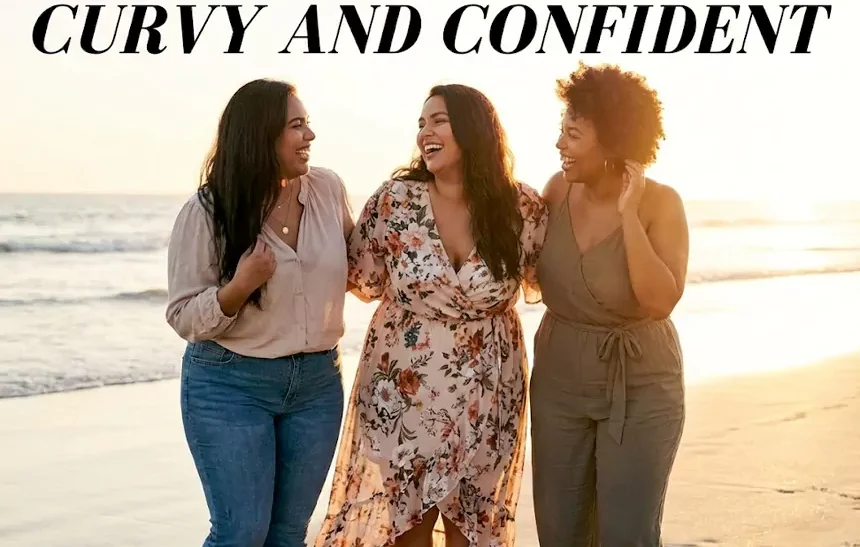
Being curvy and confident means accepting your body right now while building habits that support your mental health and self-worth. It’s not about fitting into one size or following trends. It’s about creating a healthy relationship with yourself through daily practices, mindset shifts, and choosing clothes that make you feel good without strict rules.
What Does It Mean to Be Curvy and Confident
Being curvy and confident means you value yourself beyond your appearance. It’s about recognizing that your worth exists independently of your size or shape.
Research shows that over half of teenage girls feel unhappy with their bodies by age thirteen, and these feelings often continue into adulthood. About 46 percent of young adults aged 18 to 24 reported negative effects on wellbeing from body image in 2022. These numbers reveal how common body dissatisfaction (the antonym of body confidence) is, but they also show why building confidence matters. When you develop body positivity, you stop waiting for permission to feel good about yourself. You dress how you want today, not after losing weight or changing your shape. You take photos without endless editing. You live fully in the body you have right now, embracing full-figured confidence as a natural part of who you are.
The Psychology of Body Confidence
Your confidence comes from inside your mind, not from the mirror. Studies confirm that positive body image correlates with higher self-esteem and lower anxiety.
Think of confidence building as a skill you practice, not a destination you reach. Your brain can learn new patterns. The term “confidence” originates from the Latin word “fidere,” which means to trust, while self-esteem (a holonym of confidence, as it encompasses broader self-evaluation) comes from the Latin “aestimare,” meaning to value or appraise. When you catch yourself thinking negative thoughts about your body, pause and redirect. Ask yourself: Would I say this to a friend? Probably not. Research shows that body image positively connects with self-efficacy and self-esteem while negatively relating to unhealthy weight loss intentions. This means when you feel better about your body, you make healthier choices overall. You exercise because it feels good, not as punishment. You eat foods that nourish you without guilt or restriction. Studies involving over 13,000 college students across 31 countries found that self-esteem correlated positively with life satisfaction.
Daily Confidence-Boosting Habits for Curvy Women
Small daily actions create lasting change. You don’t need a complete transformation to start feeling better about yourself.
Mindset Shifts That Work
Stop comparing yourself to others online. Over 72 percent of girls felt better after unfollowing toxic beauty advice on social media. Curate your feed intentionally. Follow people who show real, unedited bodies. Follow creators of different sizes, ages, and backgrounds. This rewires what you consider normal and beautiful. When you see diverse bodies daily, your own body stops feeling like an outlier. Size acceptance (a hyponym of body positivity, referring specifically to accepting all body sizes) becomes easier when you normalize different shapes.
Practice self-acceptance language. Instead of “I hate my stomach,” try “My body digests food and keeps me alive.” This shift from criticism to appreciation takes time, but it works. Your body does incredible things every single day. It heals cuts, fights illness, and moves you through the world. That deserves respect. Developing self-compassion (a related entity to self-esteem) strengthens your mental resilience.
Habits That Really Help
Move your body in ways that feel good. Dance in your living room. Walk in nature. Stretch while watching TV. The goal is not burning calories or changing your shape. The goal is connecting with what your body can do. Meta-analysis found that body-positive content improves body satisfaction and emotional well-being, especially when highlighting diverse representations and self-acceptance.
Wear clothes that fit you now. Not the size you were five years ago or hope to be next year. When your clothes fit comfortably, you feel better all day. You stop tugging at waistbands or avoiding mirrors. Comfort directly impacts your confidence. Keep a daily confidence routine simple: one kind thought about your body each morning, movement that feels enjoyable, and one moment of gratitude for what your body does. This practice builds positive self-regard (a synonym for healthy self-esteem) over time.
Style Tips That Highlight Curves (Without Rules)
Fashion should work for you, not against you. There are no universal rules about what curvy women “should” or “shouldn’t” wear.
Wear what makes you feel powerful. Some days that’s a fitted dress. Other days it’s oversized sweats. Both are valid choices. The key is wearing things that feel authentic to you. Body-positive brands are expanding size ranges and prioritizing fit and comfort across diverse body types. More companies now offer extended sizing, which means more options for everyone. Social media platforms show growing movements around celebrating curves with confidence through hashtags and body-positive fashion content.
Pay attention to fabric and fit, not trends. Does the material feel good on your skin? Do you feel comfortable moving in it? Can you breathe easily? These questions matter more than whether something is “flattering” by outdated standards. Inclusive fashion means finding clothes that work for your life and your comfort level. You might love bold prints and statement pieces, or you might prefer neutral basics. Neither choice is right or wrong. Your style should reflect who you are, not who magazines tell you to be. Plus-size fashion (a meronym of inclusive fashion, representing one specific component) continues expanding as brands recognize the demand.
Building Self-Worth Beyond Physical Appearance
Your value extends far beyond how you look. This sounds obvious, but it’s easy to forget in a culture obsessed with appearance.
Identify what you’re good at and what brings you joy. Maybe you’re a great listener. Maybe you make people laugh. Maybe you solve complex problems at work or create beautiful art or raise kind children. These qualities define you more than your dress size ever will. Research confirms that positive body image satisfaction links closely to beneficial psychological outcomes that enhance quality of life. Evidence suggests that self-esteem benefits multiple life domains including relationships, work, mental health, and physical health across different ages and demographics.
Spend time on activities unrelated to appearance. Read books that challenge you. Learn a new skill. Volunteer for causes you care about. Build relationships based on shared interests and values. When you invest in yourself beyond your body, your self-esteem grows from a foundation that can’t be shaken by a bad photo or an unkind comment. Inner confidence (a collocation commonly paired with “outer appearance”) becomes your anchor.
Despite recent progress, 2024 marked concerns about a return to thinness as the norm in fashion and media. Fashion week reports showed that diversity in mid and plus-size model representation either declined or stayed the same across major cities. This makes personal body diversity acceptance even more important. You can’t control cultural trends, but you can control how much power you give them over your self-worth. The body acceptance movement (a hypernym that encompasses body positivity and related approaches) continues evolving despite setbacks.
Real Stories That Inspire Confidence
Real women are building confidence every day, not through dramatic transformations but through small consistent choices.
Longitudinal studies reported sustained improvements in body satisfaction with consistent exposure to body-positive content. This means the more you surround yourself with affirming messages, the more they stick. Women who follow diverse creators, wear clothes they love, and practice kind self-talk report feeling better about their bodies over time. Curvy empowerment (a connotation that suggests strength and agency) grows when you see yourself represented positively.
The journey is not linear. You will have days when you feel great and days when you struggle. Both are part of being human. Positive and negative body image are not opposite ends of the same spectrum, and you can experience both simultaneously. This means you can appreciate your body’s strength while also feeling frustrated about how jeans fit. These feelings can coexist. Confidence does not mean feeling perfect every single day. It means treating yourself with respect even on difficult days. Body neutrality (a related movement focused on body function over appearance) offers another approach when positivity feels out of reach.
Key Points to Remember About Being Curvy and Confident
1. Confidence is a practice, not a destination. You build it through daily habits and mindset shifts, not by reaching a certain size or weight. Research suggests that self-esteem grows by varying degrees until age 60, showing it’s never too late to develop healthy self-regard.
2. Your body deserves respect right now. You don’t need to earn the right to feel good about yourself through weight loss, exercise, or any other achievement. Unconditional self-acceptance (a rare attribute in our culture) is your birthright.
3. Social media affects your body image. Curating your feed to include diverse, realistic bodies helps normalize different shapes and sizes in your mind. Digital wellness (a common attribute of healthy body image) requires conscious choices about what you consume.
4. Movement should feel good, not punishing. Exercise for mental health, stress relief, and joy rather than appearance changes or calorie burning. Joyful movement (a collocation in body-positive communities) reconnects you with your body’s capabilities.
5. Self-worth extends beyond appearance. Your skills, relationships, kindness, and contributions matter infinitely more than how you look in photos or what size clothes you wear. Intrinsic worth (the core concept underlying body positivity) exists regardless of external validation.
Note: While “Curvy and Confident” appears as a phrase in social media content, books, and fashion discussions, it is not a formally defined movement with specific founding dates or organizations. This article draws from the broader body positivity movement, research on self-esteem and body image, and current trends in inclusive fashion to address the concept of building confidence for curvy women.